Tuesday, June 2, 2026

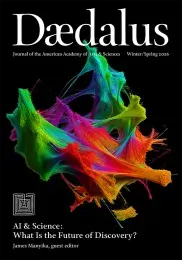
AI & Science: What Is the Future of Discovery?


View PDF


Continued progress in artificial intelligence, its expanding usefulness in science, and its contributions to landmark advances suggest that we may have entered a new era of AI for science.

The breakthroughs so far—such as predicting the structure of practically every known protein, with profound implications for our understanding of biology, health, and the treatment of disease—are notable not only for what was achieved but also how it was achieved and what that suggests for scientific progress.

This special double issue of Dædalus poses the question: What is the future of scientific discovery in this new age of AI?

Thirty-three scientists responded. Bringing perspectives from life sciences and medicine, cognitive science and neuroscience, the physical and earth sciences, chemistry and materials science, computer science, mathematics and the social sciences—they draw on their work at the frontier of AI and science.

The authors write with an eye to the future, not just the present. They explore what is being achieved and what possibilities lie ahead; examine AI’s limitations and efforts to move forward; and investigate the larger implications of AI-assisted science—on how science is done, the role of the scientist, and the scientific method, as well as the challenges and complexities involved.

The authors together exemplify a long-standing bidirectional relationship: AI advancing science, while science advances AI. Where that relationship will take us—a golden age of discovery? New scientist-machine collaborations? Autonomous labs? Discoveries without human understanding?—is a future we are only beginning to imagine, and one we must also shape if the beneficial possibilities are to be realized.

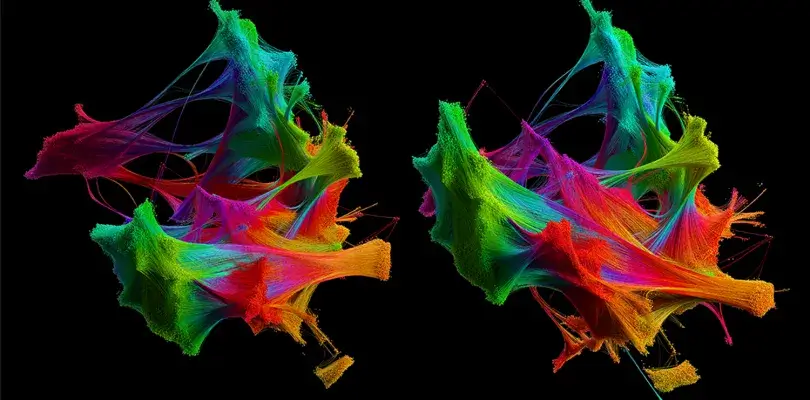
Image: UMAP sculptures visualizing three Dædalus volumes on artificial intelligence. © 2026 by Refik Anadol.

Friday, May 22, 2026

AI-Driven Surgical Reporting Reduces Documentation Time by 70%, Desai Sethi Urology Institute Reports at AUA 2026

 By: Lisette Hilton | May 22, 2026 | 5 min. read 

Dr. Bruno Nahar in a dark suit stands behind a clear podium, speaking into a mounted microphone and gesturing with one hand during a presentation at AUA2026.

Tags: AI, artificial intelligence, AUA2026, cancer research, Desai Sethi Urology Institute, Dr. Archan Khandekar, technology, urology

Wednesday, May 20, 2026

International Scientists Award Ceremony 2026: Celebrating Global Research Excellence


In today’s rapidly evolving world, scientific innovation and research play a crucial role in shaping the future of humanity. To recognize and honor exceptional contributions in science, technology, and innovation, the International Scientists Award Ceremony 2026 brings together researchers, academicians, innovators, and professionals from around the globe on one prestigious international platform.

A Global Platform for Researchers

The International Scientists Award Ceremony 2026 is designed to encourage groundbreaking research and provide worldwide recognition to deserving scientists and scholars. This online event allows participants from any country to present their achievements, share innovative ideas, and connect with global research communities without travel limitations.

The event welcomes:

Event Details

📅 Event Date: 25–27 JUN 2026
🌐 Mode: Online Event
📜 Prompt E-Certificate Available
📧 Contact: info@scientistsaward.com

Why Participate?

1. International Recognition

Participants gain global exposure for their research achievements and innovative contributions. Recognition from an international scientific platform enhances academic and professional credibility.

2. Networking Opportunities

The event creates opportunities to connect with researchers, professors, industry experts, and innovators worldwide, encouraging future collaborations and research partnerships.

3. Showcase Innovative Research

Participants can present research papers, projects, inventions, and innovative ideas to an international audience interested in scientific advancement and technological development.

4. Career Enhancement

Receiving recognition through an international award ceremony can strengthen academic profiles, research portfolios, and professional opportunities.

5. Flexible Online Participation

As a fully virtual event, participants can join conveniently from anywhere in the world without travel expenses or visa requirements.

Supporting Innovation and Scientific Progress

The International Scientists Award Ceremony 2026 is more than just an award event. It is a global initiative dedicated to encouraging scientific progress, supporting innovative thinkers, and inspiring the next generation of researchers.

By bringing together experts from diverse scientific disciplines, the event promotes knowledge sharing, interdisciplinary collaboration, and global academic excellence.

Join the Celebration of Scientific Excellence

Researchers and innovators worldwide are invited to become part of this prestigious international event. Whether you are an experienced scientist or an emerging researcher, this platform offers an opportunity to showcase your achievements and gain international recognition.

Join us in celebrating innovation, research excellence, and the future of science at the International Scientists Award Ceremony 2026.

For inquiries and participation details, contact: info@scientistsaward.com

Saturday, November 15, 2025

Cancer to comics — Bengal researcher makes art out of science


From cancer to comics, from scientist to artist, from MIT to IIT — it has been an unusual journey for Bengal boy Argha Manna, who spent a chunk of his youth peering into the microscope but who later realised it was more fun spreading science through graphic art.


On Saturday (November 15, 2025), this trained biologist will be conducting a workshop in the city, History in Comic Art, teaching enthusiasts about the methods of researching, reimagining and crafting a visual story. “Art and science inspire each other and are very much connected. It was only in the 19th century that we separated them as disciplines. From the time of Leonardo da Vinci to William Turner, there was no boundary. Da Vinci himself was a brilliant scientist and engineer,” Mr. Manna, 38, told The Hindu.

“William Turner was a good friend of Michael Faraday, and many of his atmospheric watercolours were inspired by science (Turner and the Scientists by James Hamilton is one of my favourite reads). There are many examples in the history of humankind where the marriage between art and science has created new knowledge, which has pushed humanity to the next level,” he said.


itgn.ac.in/

From cancer to comics, from scientist to artist, from MIT to IIT — it has been an unusual journey for Bengal boy Argha Manna, who spent a chunk of his youth peering into the microscope but who later realised it was more fun spreading science through graphic art.

On Saturday (November 15, 2025), this trained biologist will be conducting a workshop in the city, History in Comic Art, teaching enthusiasts about the methods of researching, reimagining and crafting a visual story. “Art and science inspire each other and are very much connected. It was only in the 19th century that we separated them as disciplines. From the time of Leonardo da Vinci to William Turner, there was no boundary. Da Vinci himself was a brilliant scientist and engineer,” Mr. Manna, 38, told The Hindu.

“William Turner was a good friend of Michael Faraday, and many of his atmospheric watercolours were inspired by science (Turner and the Scientists by James Hamilton is one of my favourite reads). There are many examples in the history of humankind where the marriage between art and science has created new knowledge, which has pushed humanity to the next level,” he said.

This boy from Liluah near Howrah resident, joined the Bose Institute in Kolkata in 2009 as a research scholar on cancer biology, but dropped out of the programme in 2015 without accepting a degree. The reason? That year was the 100th anniversary of Albert Einstein’s General Theory of Relativity, and the Science magazine had marked the occasion through comic art. “It was kind of an ‘Aha!’ moment for me. I thought if a serious scientific journal like Science could publish comic art, why couldn’t I do it? I had found my right calling,” the scientist-artist said.

“But this did not happen immediately. As I dropped out of the Bose Institute, I had to take a job to pay my bills. I took up a job in Ananda Bazar Patrika as a journalist. I didn’t have good skills in drawing, but there I learnt from the principal illustrator, Suman Chaudhury, who became my school. I did a double shift in the office for four years just to learn art. In the morning, I was a journalist; in the evening I learnt cartooning, illustration and techniques of fine art,” he said.


It was while working at the newspaper that he started creating comic art on the history of science. Recalling his fascination with microscopy, he tried to critically enquire, in the artwork, how microscopy, as a tool, started a revolution in in science.


In 2020, during the COVID-19 pandemic, one of his comic artworks, Be Aware of Droplets and Bubbles, published in the Annals of Internal Medicine, generated interest in the scientific community and shortly after that, he earned a fellowship from the Massachusetts Institute of Technology. “That’s when my artistic career began to take shape. I got a call from MIT and I started working with Prof. Lydia Bourouiba on the history of disease transmission, focusing on air-borne disease. I left the conventional way of publishing science and my project was asking critical questions and documenting paradigm shifts in disease transmission research through comics — graphic non-fiction,” Mr. Manna said.

By the end of 2022, a job offer from IIT Gandhinagar brought him back to India, but he has retained his association with MIT as well, returning there every summer to work on a book project. So, he holds twin designation at the moment: Artist-in-Residence (IIT Gandhinagar) and Research Affiliate (MIT).

“During my PhD days, I liked to see what was going on at the microscopic level. I never thought that my love for images would pull me towards art. I felt deeply that science nowadays is becoming deeply technical and that the philosophical part is being ignored. I wanted to express scientific knowledge, the development of science, and the history of science beyond academic settings,” Mr. Manna summed up his work. “I do not believe in unidirectional knowledge dissemination or monologue lectures. I am envisioning the workshop as a collaborative space in which we will have dialogues, ask critical questions, and draw stories together.”

Published - November 15, 2025 05:44 am IST

Friday, November 14, 2025

Opportunity profile: Do your homework for data research call

 

Applicants to ESRC scheme should check their project is feasible before applying

Top tips

  • Make the most of available resources to ensure you have designed a question the data can answer.
  • Public engagement should be incorporated in bids.
  • Consider and demonstrate awareness of the Digital Economy Act and the Five Safes framework.
  • Commitment to the wider research community is also important.

Administrative Data Research UK—a partnership that aims to convert public sector data into research assets which then can feed back into public policy—has opened its 2025 research fellowship scheme, supported by the Economic and Social Research Council.


Controlling Triple Quantum Dots in a Zinc Oxide Semiconductor

 A discovery of electrically controlled triple quantum dots in zinc oxide by the Advanced Institute for Materials Research (WPI-AIMR), Tohoku University, moves us closer to energy-efficient quantum devices can be used practically.

(a) The schematic of the fabricated ZnO device. Two-dimensional electron gas is formed between (Mg, Zn)O and ZnO. Quantum dots are formed by applying gate voltage to this two-dimensional electron gas. (b) Scanning electron microscope image of the device. The triple quantum dots are formed in the lower half, and the sensor quantum dot and quantum point contact are formed in upper half.

Quantum computers have the potential to solve certain calculations exponentially faster than a classic computer could, but more research is desperately needed to make their practical use a reality. Quantum computers use a basic unit of information called quantum bits (qubits) to run - like how classical computers use a binary system of 0s and 1s, but with many more possibilities. However, a large number of qubits are required for quantum computers to function. Research into quantum dots - nanostructures with unique properties that allow them to serve as qubits - is crucial to overcoming this roadblock.

Researchers at the Advanced Institute for Materials Research (WPI-AIMR), Tohoku University, have made a significant step toward the realization of next-generation quantum information processing technologies. In this study, the research team successfully created and electrically controlled triple quantum dots in zinc oxide (ZnO), an oxide semiconductor known for its good spin coherence and strong electron correlations. While single and double quantum dots in ZnO have been previously demonstrated, scaling up to multiple, controllable dots has remained a major challenge until now. By coupling multiple quantum dots, researchers can study complex quantum behaviors and develop potential architectures for quantum computation.

The team also observed a unique phenomenon known as the quantum cellular automata (QCA) effect, which emerges only in systems composed of three or more coupled quantum dots.

White characters in figure show the number of electrons in each quantum dots. (a) Observed charge stability diagram. Three different slopes of the charge transition lines indicate formation of triple quantum dots. No transition line is observed in the lower left regime, which suggests these quantum dots are in few-electron regime. (b) QCA effect observed in ZnO quantum dots. Two electrons move at the same time when the number of electron changes from 022 to 113.

AI & Science: What Is the Future of Discovery?

  View PDF Continued progress in artificial intelligence, its expanding usefulness in science, and its contributions to landmark advances su...